RF microneedling for stretch marks
RF microneedling for stretch marks: red vs white striae and what the trials measured
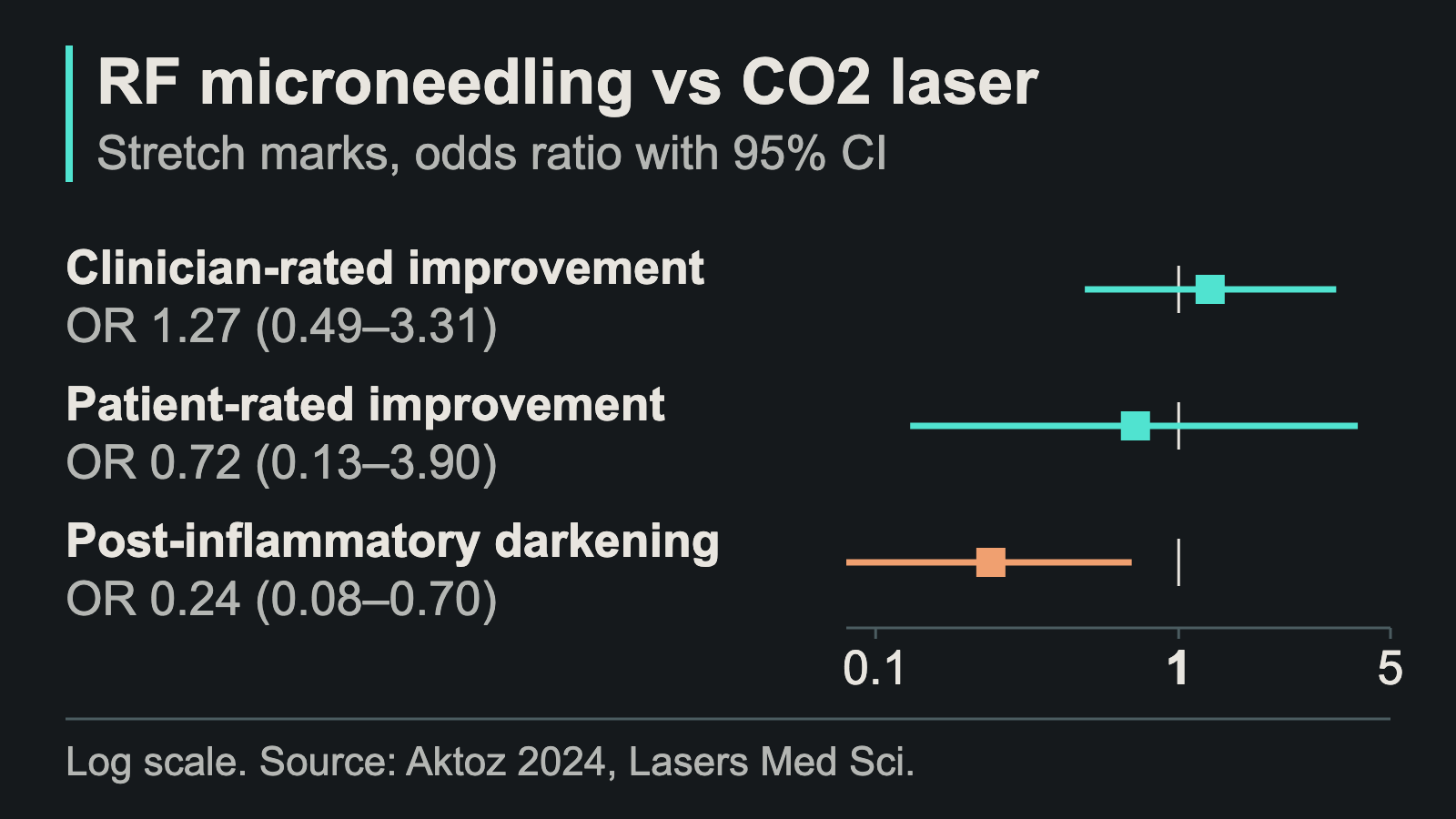
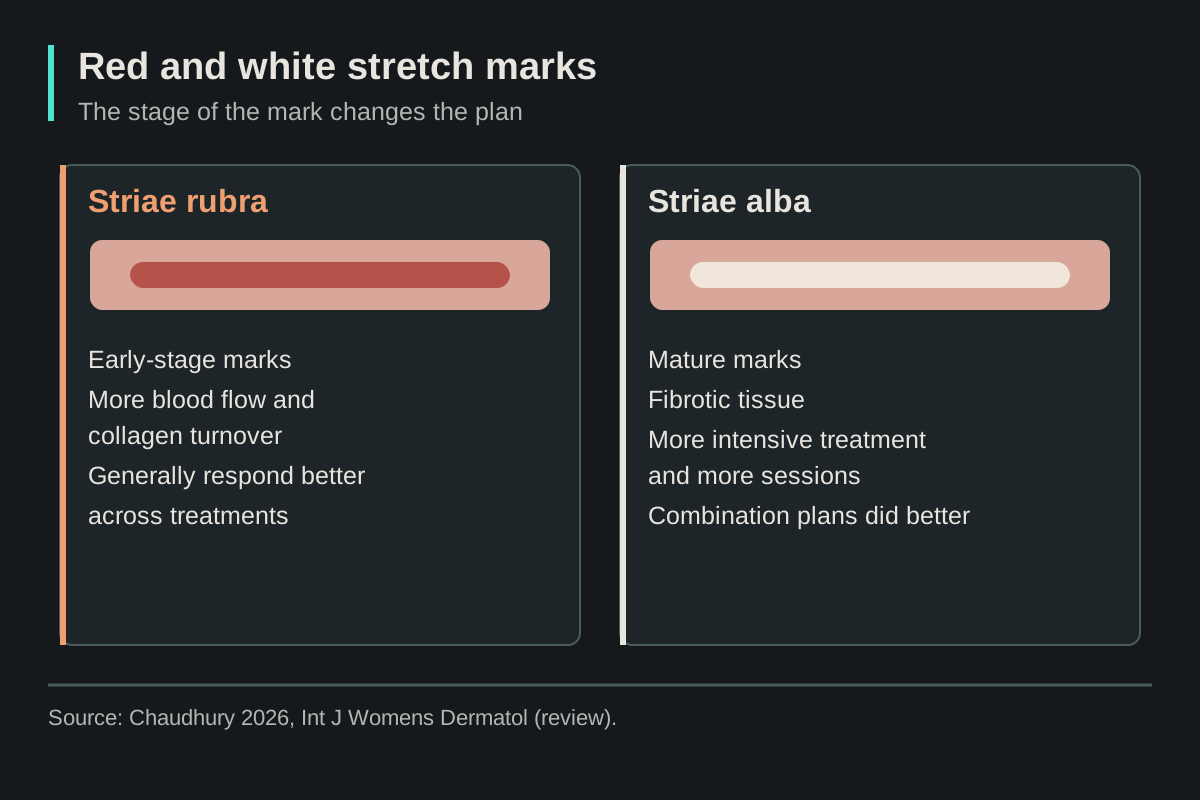
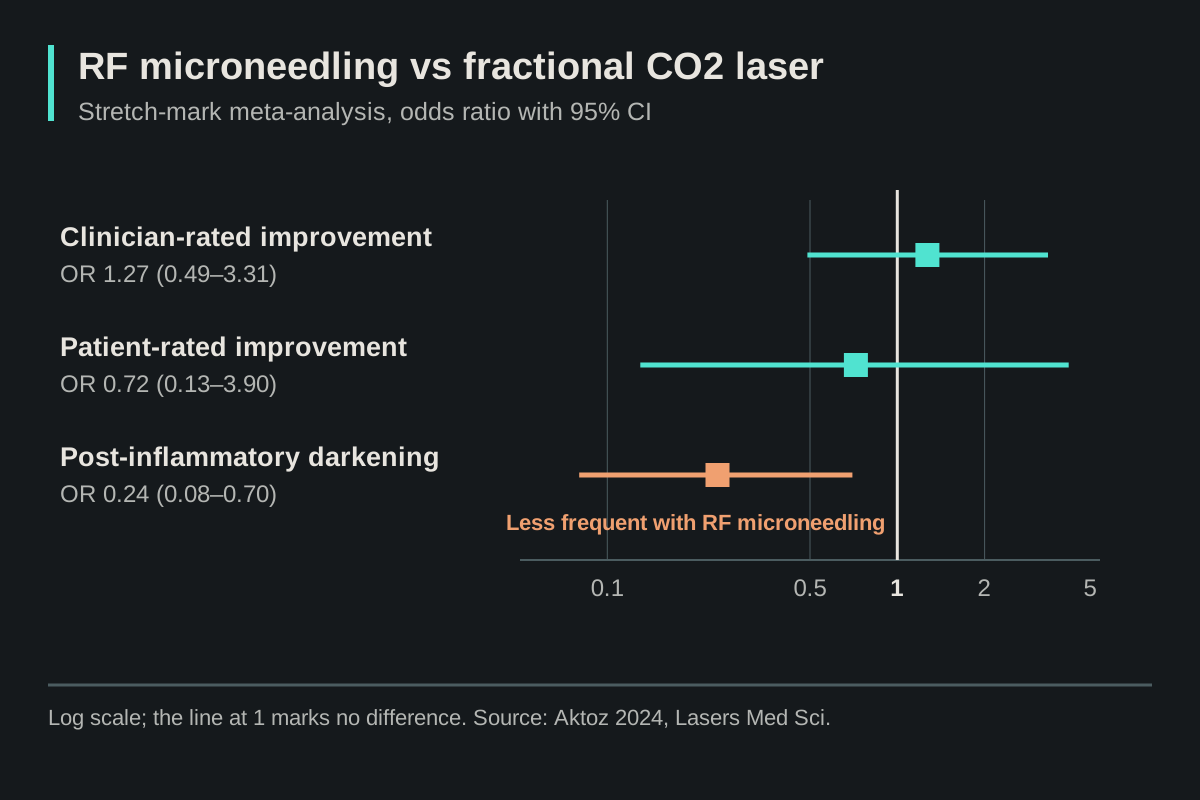
Reviews count RF microneedling among the effective treatments for stretch marks, and early red marks (striae rubra) generally respond better than mature white ones (striae alba), which often need combined treatments and several sessions.[1][2] Against fractional CO2 laser, a 2024 meta-analysis found no significant difference in improvement, whether judged by clinicians or by patients, and less post-inflammatory darkening after RF microneedling.[3]
The Potenza Seoul team edits these guides. Editorially updated: .
What are stretch marks, and why does their colour matter?
Stretch marks (striae distensae) are scars in the dermis left by rapid stretching of the skin during puberty, pregnancy or weight change. Reviews sort them by stage. Early-stage marks, striae rubra, have more blood flow and collagen turnover. Mature marks, striae alba, are fibrotic, and they need more intensive treatment and more sessions to change.[1]
Weight change is one of the triggers. If large weight loss has also left your skin slack, mention it at the consultation, since loose skin after large weight loss is a separate concern from the marks.
How does RF microneedling work on a stretch mark?
Fine needles enter the mark to a set depth, and radiofrequency current passes through them. Potenza’s FDA summary, K192545, says that as the current passes through tissue “it generates an electrothermal reaction which is capable of coagulating the tissue” (K192545 device description, checked 24 October 2026). In a study of needle-delivered bipolar RF in human skin, the heated zones in the dermis were replaced by new tissue by 10 weeks, with more elastin and hyaluronic acid than before.[4] Mode, tip and depth choices are explained in how Potenza sets depth and mode.
What did the trials of RF microneedling measure?
Against fractional CO2 laser, a 2024 meta-analysis pooled the studies that compared the two for stretch marks. Neither clinicians’ ratings of improvement (odds ratio 1.27; 95% CI 0.49–3.31) nor patients’ own ratings (0.72; 0.13–3.90) differed significantly. Post-inflammatory darkening was less frequent after RF microneedling (0.24; 0.08–0.70).[3]
A second 2024 meta-analysis, of 11 studies including 6 randomised trials, reported a significant difference for clinical improvement in its RF microneedling subgroup (standardised mean difference 0.57; 95% CI 0.20–0.94; P = 0.003), and satisfaction comparable with laser.[5] A 2026 review describes a comparison in Chinese women in which RF microneedling improved the appearance of stretch marks more than a 1565-nm non-ablative fractional laser, with more collagen and elastic fibre on biopsy, but with more discomfort during treatment; satisfaction and melanin index changes were similar.[1]
Broader reviews reach a similar view. A 2025 systematic review of 69 articles found good results for ablative and non-ablative lasers and for radiofrequency with microneedles, and concluded that current evidence does not allow a single treatment to be defined.[2] Stretch marks remain a small part of the comparative research: a 2026 review of needling against ablative lasers found 4 stretch-mark studies, with 87 patients, among its 27.[6]
Where does RF microneedling fit for red and for white marks?
Red marks respond more readily: across treatments, striae rubra generally did better than striae alba.[1] Tretinoin 0.1% and glycolic acid have also improved recent marks.[2]
White marks are harder. Combination plans that brought together microneedling, radiofrequency, platelet-rich plasma or fractional CO2 laser gave better outcomes than single treatments, especially for striae alba. In one comparison, RF microneedling combined with fractional CO2 laser reduced the width of white marks, while 0.1% tretinoin cream did not significantly reduce their length or width; the review also reports more post-inflammatory darkening with that combination.[1]
Skin tone shapes the plan. People with darker skin (Fitzpatrick types IV to VI) are at higher risk of post-inflammatory darkening, which may influence the choice of treatment.[1] The American Academy of Dermatology notes that the studies comparing RF microneedling with laser included only small numbers of people with darker skin (AAD microneedling page, checked 24 October 2026).
Is plain microneedling enough for stretch marks?
Sometimes. In the 2024 meta-analysis of 11 studies, microneedling and lasers were about equally effective (P = 0.35), and patients rated their satisfaction higher after microneedling than after laser or non-laser treatments. Microneedling caused more pain than laser, and post-inflammatory darkening was less common with it.[5] A 2026 review describes a 40-patient comparison in which microneedling and fractional CO2 laser reduced stretch-mark size by six months with no notable difference in overall efficacy, and calls microneedling a cost-effective option with a lower risk of uneven pigment.[1] The difference between needles alone and needles with RF heat is set out in RF microneedling vs microneedling.
How many sessions, and what is recovery like?
Plan for a course rather than one visit. The 2026 review’s comparison table lists three to six sessions for microneedling on stretch marks.[1] The American Academy of Dermatology notes that results appear gradually as the body produces collagen and usually take several months, and that a microneedling session over stretch marks on both hips may take 15 to 30 minutes. Redness or darker shades, a sunburn-like feeling and swelling usually settle within a few days to a week. What to expect day by day after Potenza is in Potenza sessions and aftercare.
FDA’s page on microneedling devices lists pregnancy or breastfeeding, isotretinoin now or in the past six months, an active skin infection, a history of keloid scars and a tan or planned sun exposure in the two weeks after treatment among the reasons the procedure may not be suitable (FDA microneedling devices page, checked 24 October 2026). Stretch marks often appear in pregnancy, so timing matters.[1]
Can RF microneedling remove stretch marks?
Reviews describe improvement in how stretch marks look, and some studies measured narrower marks. Early red marks generally respond better than mature white ones.[1]
Is RF microneedling better than CO2 laser for stretch marks?
A 2024 meta-analysis found no significant difference in improvement, rated by clinicians or by patients, and less post-inflammatory darkening after RF microneedling.[3]
Does RF microneedling work on old white stretch marks?
White marks are mature and fibrotic and respond less than red ones. Combination plans, for example RF microneedling with fractional CO2 laser, gave better outcomes for them than single treatments.[1]
References
(6)
Bibliographic records retrieved from PubMed (U.S. National Library of Medicine).
Chaudhury H, Remmert N, Chen H, et al. Advancements in treating stretch marks across all skin types: a comprehensive review of therapeutic modalities. Int J Womens Dermatol. 2026;12(1):e244.
Algarra Sahuquillo J, Martín-Gorgojo A. Stretch Marks: Systematic Review of its Therapeutic Approach. Actas Dermosifiliogr. 2025;117(4):104553.
Aktoz F, Yilmaz N. Comparing fractional microneedle radiofrequency and fractional CO2 laser for striae distensae treatment: a systematic review and meta-analysis. Lasers Med Sci. 2024;39(1):271.
Hantash BM, Ubeid AA, Chang H, et al. Bipolar fractional radiofrequency treatment induces neoelastogenesis and neocollagenesis. Lasers Surg Med. 2009;41(1):1-9.
Sun X, Jia X, Huang L. Microneedling Therapy for Striae Distensae: Systematic Review and Meta-Analysis. Aesthetic Plast Surg. 2024;48(15):2915-2926.
Almahzoum K, Alfailakawi W, Alharran AM, et al. Comparative Efficacy and Safety of Needling-Based Therapies Versus Ablative Fractional Lasers for Scar Management: A Systematic Review and an Exploratory Meta-Analysis. Photodermatol Photoimmunol Photomed. 2026;42(5):e70121.