RF microneedling on the neck
RF microneedling on the neck: horizontal lines, laxity and what the trials compared
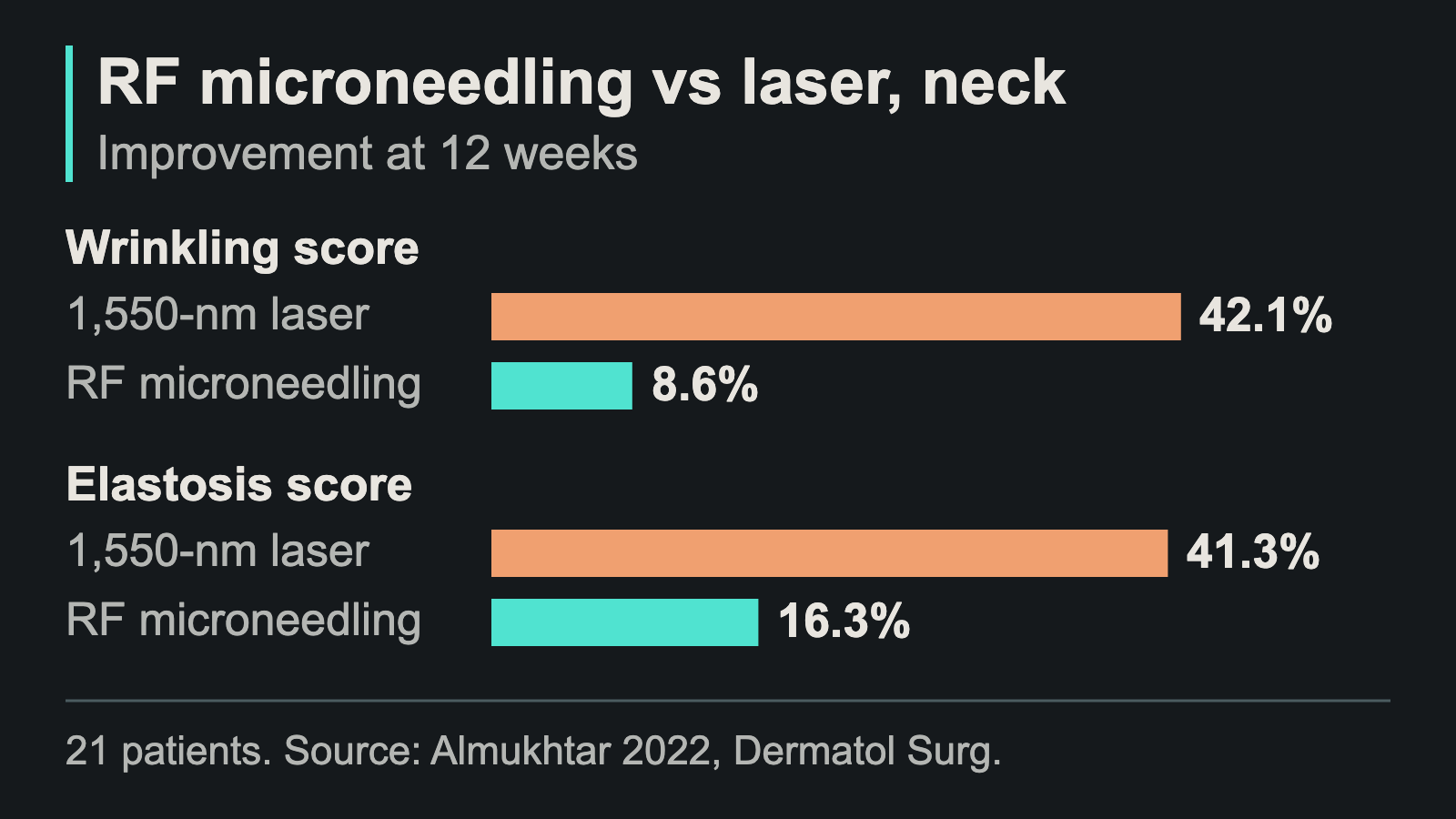
RF microneedling is used on the neck for wrinkling, horizontal lines and laxity, and neck trials report improvement. In a 21-person head-to-head trial, a 1,550-nm non-ablative fractional laser improved wrinkling and elastosis scores more, while RF microneedling reduced the horizontal neck wrinkle score more.[1] In a 2026 study of the lower face and neck, RF microneedling alone reduced the volume under the chin, and the neck was treated at shallower needle depths than the jawline.[2]
The Potenza Seoul team edits these guides. Editorially updated: .
What does RF microneedling do in neck skin?
Fine needles enter the skin to a set depth and pass radiofrequency current into the dermis, heating small zones around each tip. A 2026 review of non-surgical neck and jawline treatments groups RF microneedling with microneedling and microcoring as ways to stimulate elastin.[3] How Potenza’s tips and modes set that depth is explained in how Potenza works.
What did the head-to-head neck trial find?
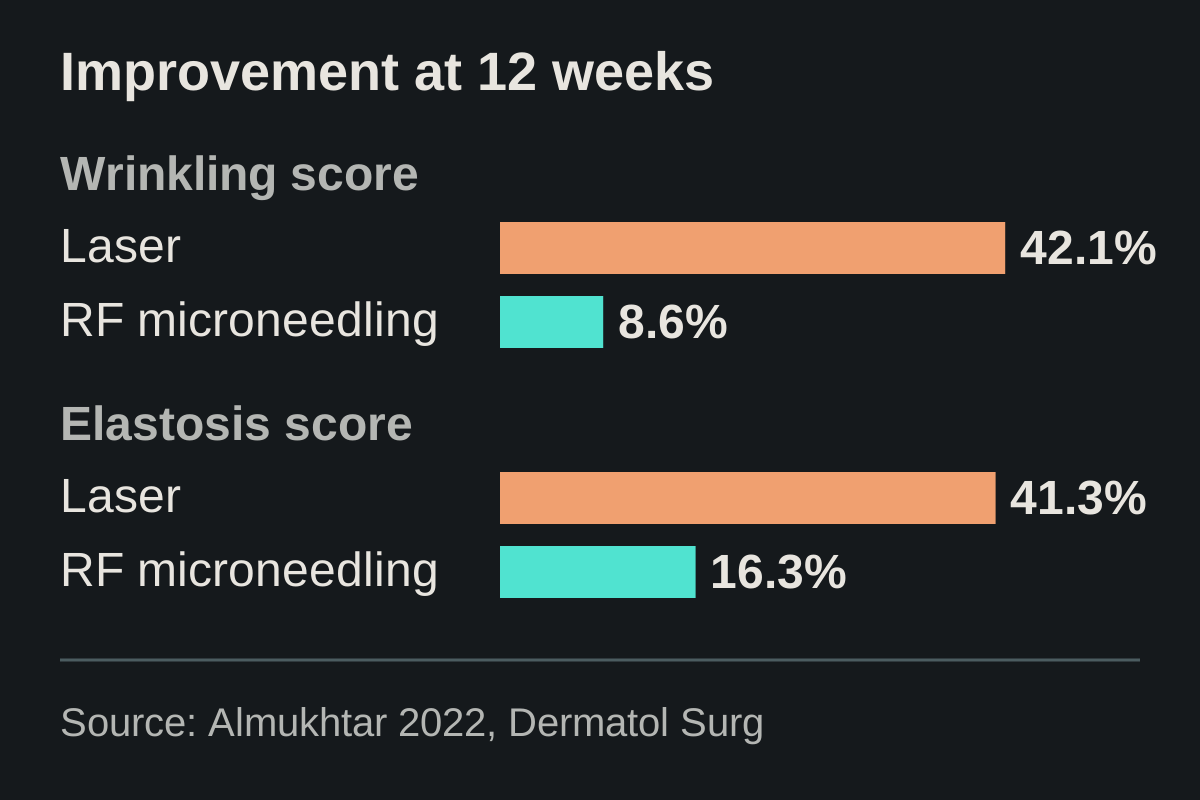
A randomised, investigator-blinded trial divided 21 people between RF microneedling and a non-ablative fractional 1,550-nm erbium:glass laser, and assessed them 12 weeks after the last treatment. Both groups improved significantly on wrinkling and elastosis. The laser group improved more on both blinded scores: 42.1% against 8.6% on the Fitzpatrick-Goldman wrinkling score, and 41.3% against 16.3% on elastosis. The RF microneedling group showed the larger reduction on the Horizontal Neck Wrinkle Severity Score, and satisfaction trended higher with the laser.[1]
What did the other neck studies measure?
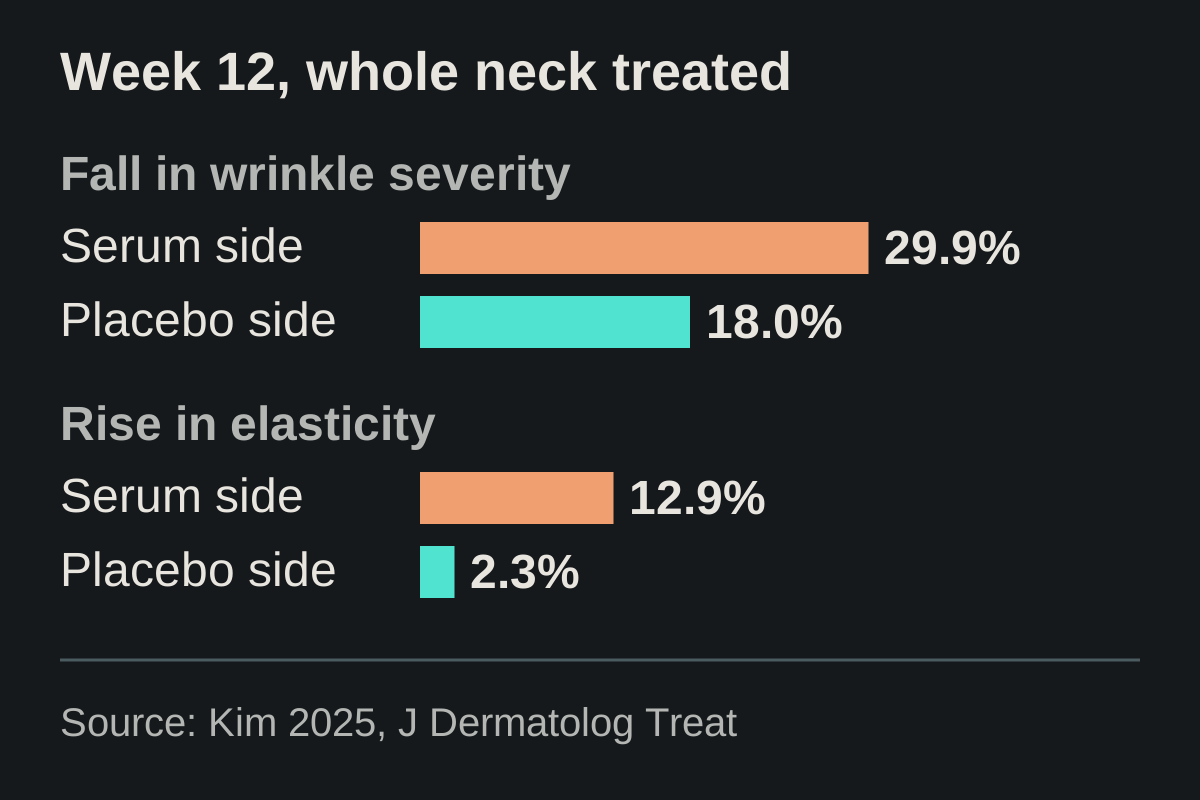
A 2025 split-neck trial treated the whole neck of 31 people aged 30 to 65 with RF microneedling, then applied an antioxidant serum (vitamins C and E with ferulic acid) to one side and a placebo to the other. At week 12, wrinkle severity had fallen 29.9% on the serum side and 18.0% on the placebo side, and elasticity had risen 12.9% and 2.3%. Two of the authors work for SkinCeuticals, a skincare company.[4]
A 2026 German study treated photoaged skin of the lower face and neck. Its volume analysis compared 27 women who had RF microneedling alone with 26 who had RF microneedling followed by a 1,927-nm thulium laser, with assessments 90 and 180 days after treatment. Volume under the chin fell significantly in both groups, with no significant difference between them. Blinded assessors saw improvement in the jawline and neck in both groups, and pigmentation improved significantly only in the combination group. The RF microneedling-only patients came from the team’s earlier cohort rather than a randomised arm.[2]
How deep do the needles go on the neck?
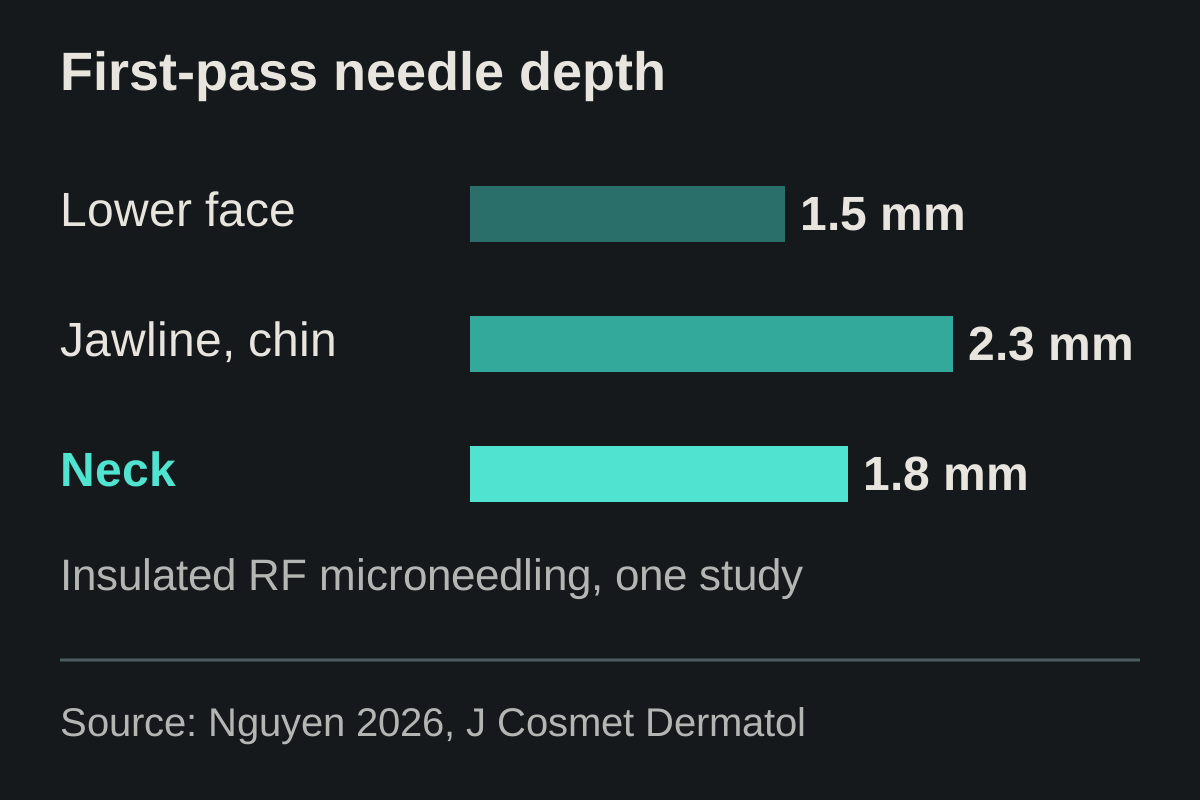
In that 2026 study, which used Genius, another insulated RF microneedling device, the neck was treated at 1.8, 1.5 and 1.0 mm on three passes. The jawline and under-chin area went deeper, to 2.3, 1.9 and 1.5 mm, and the lower face stayed at 1.5, 1.2 and 1.0 mm.[2] Potenza’s depth is also set area by area, so the depth planned for your neck is a fair question at the visit.
Adverse-event reports also include fat loss. In FDA device reports from 2013 to October 2025, fat loss made up 26 of 224 reported events (11.6%), and the face, neck and abdomen were the areas treated most often.[5] The questions worth asking about depth over the jaw and neck are listed in the FDA safety notice on RF microneedling.
What is recovery like after RF microneedling on the neck?
In the 2026 lower-face and neck study, no serious adverse events were reported. In the RF microneedling-only group, patients had a numbing cream beforehand and rated the pain 5.6 out of 10 on average, with a range of 2 to 8; redness and swelling straight after treatment settled within a few days; four patients developed perioral dermatitis that cleared on its own within a few days, and one of them also had a hematoma near the orbital rim. In the group that also had thulium laser, one patient had swelling that lasted seven days and one had post-inflammatory darkening that later cleared.[2] The first week after Potenza, day by day, is in Potenza sessions and aftercare.
RF microneedling or a fractional laser for neck lines?
The trials point in different directions for different concerns. Horizontal neck lines responded more to RF microneedling in the 21-person head-to-head trial, while the wrinkling and elastosis scores improved more with the 1,550-nm laser.[1] Pigmentation on the lower face and neck improved significantly only when a thulium laser was added to RF microneedling.[2] Other in-clinic options for the neck are set out in a guide to the in-clinic options for neck lines.
Does RF microneedling work on the neck?
Neck trials report improvement in wrinkling, elastosis and horizontal lines, and a 2026 study found reduced volume under the chin. The size of the change differed between scores and studies.[1][2]
Is RF microneedling or laser better for neck wrinkles?
In a 21-person head-to-head trial, a 1,550-nm fractional laser improved wrinkling (42.1% against 8.6%) and elastosis (41.3% against 16.3%) more, and RF microneedling reduced the horizontal neck wrinkle score more.[1]
What side effects were reported after RF microneedling on the neck?
In a 2026 lower-face and neck study, redness and swelling after RF microneedling alone settled within a few days; four patients in that group developed perioral dermatitis that cleared on its own, and one of them also had a hematoma near the orbital rim. In the group that also had thulium laser, one patient had swelling that lasted seven days. No serious adverse events were reported.[2]
References
(5)
Bibliographic records retrieved from PubMed (U.S. National Library of Medicine).
Almukhtar R, Wood E, Goldman M, et al. The Efficacy and Safety of Radiofrequency Microneedling Versus a Nonablative Fractional 1,550-nm Erbium:Glass Laser for the Rejuvenation of the Neck. Dermatol Surg. 2022;48(9):937-942.
Nguyen L, Blessmann M, Schneider SW, et al. Radiofrequency Microneedling With 1927 nm Thulium Laser Versus Radiofrequency Microneedling Monotherapy for Rejuvenation of Photoaged Skin. J Cosmet Dermatol. 2026;25(1):e70685.
Nadir U, Bao-Loc-Trung M, Jeha GM, et al. A Dermatologist's Guide to Nonsurgical Rejuvenation of the Neck and Jawline. J Clin Aesthet Dermatol. 2026;19(8):50-56.
Kim J, Lee SG, Boo J, et al. Fractional microneedle radiofrequency with the application of vitamin C, E, and ferulic acid serum for neck skin rejuvenation: a prospective, double-blinded, split-neck, placebo-controlled trial. J Dermatolog Treat. 2025;36(1):2504655.
Chou M, Myers B, Avram M. Analysis of US Food and Drug Administration Data on Radiofrequency Microneedling Device Complications. Dermatol Surg. 2026;52(9):873-876.