Potenza for acne scars: what to expect
Potenza for acne scars: what to expect
Potenza can soften rolling and boxcar acne scars. The trials cited here used three or four sessions spaced four to eight weeks apart and assessed results months after the last one. In a 2026 randomised trial, scar scores fell by about 44% with RF microneedling, similar to fractional CO2 laser but with faster recovery.[1] Deep icepick scars usually need other techniques as well, and combination plans tend to outperform any single treatment.
Written by the Potenza Seoul editorial team and medically reviewed by a Korean Board-Certified Dermatologist (AAD International Fellow · ASLMS member). Last reviewed: .
Which acne scars does Potenza help most?
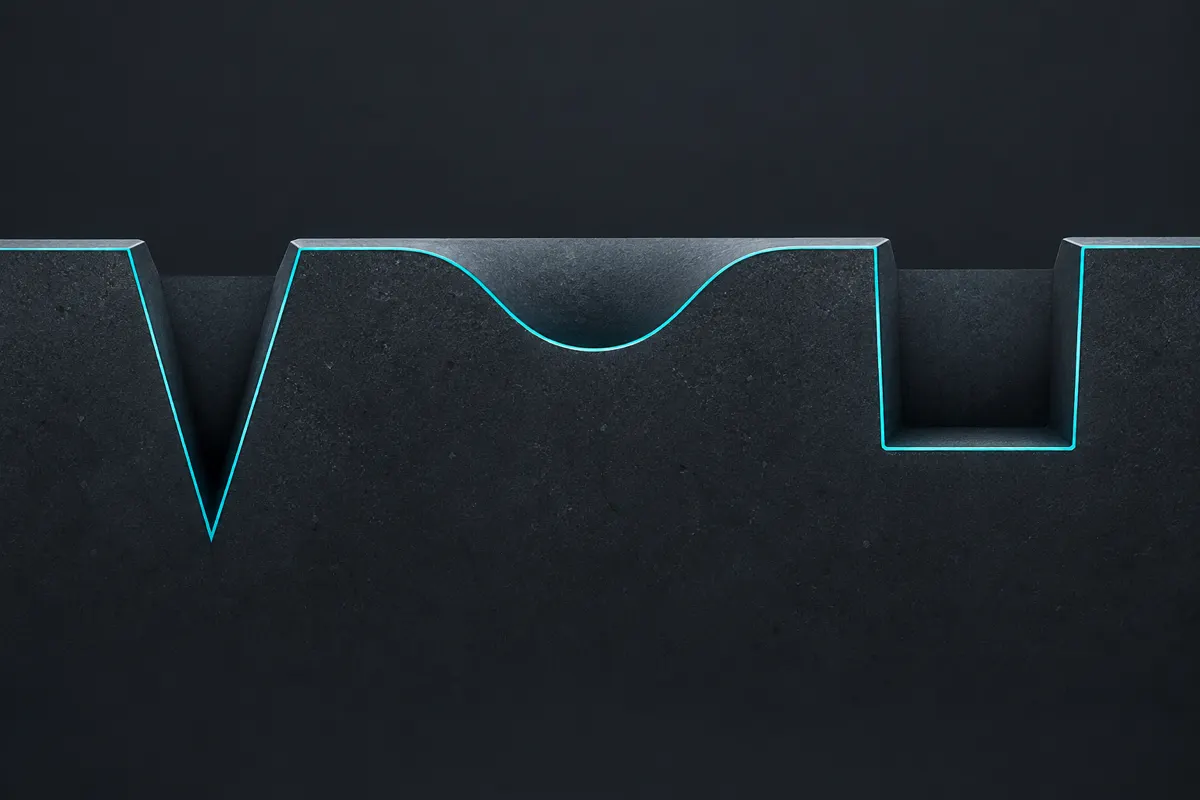
The Jacob classification sorts atrophic (sunken) acne scars into three types: icepick, rolling and boxcar.[2] Many people have more than one type, and the mix shapes the plan.
| Scar type | What it looks like | Where Potenza fits |
|---|---|---|
| Rolling | Broad, soft dips with sloping edges | Can soften; tethered scars may also need subcision |
| Boxcar | Round or oval dips with sharp edges | Shallow ones can soften; deep ones may need added techniques |
| Icepick | Narrow, deep pits | Limited on its own; punch techniques are usually added |
In the original treatment algorithm, punch techniques handle icepick and deep boxcar scars, subcision releases tethered rolling scars, and resurfacing treats the surface.[2] RF microneedling now sits among the resurfacing-type options, with its own body of evidence.[3]
How well does Potenza work for acne scars?
A 2025 systematic review of 16 studies with 481 patients, including six randomised trials, concluded that fractional RF microneedling is likely effective for acne scars as a single treatment. The authors called for more randomised trials to establish treatment settings.[3]
The clearest head-to-head result comes from a 2026 randomised, evaluator-blinded split-face trial. Thirty patients completed three sessions eight weeks apart, with RF microneedling on one side and fractional CO2 laser on the other. Average scar scores (ECCA) fell from 54.73 to 30.53 on the RF side and from 53.67 to 31.03 on the laser side, with no significant difference between them. The RF side had shorter redness, pain, swelling and scabbing, fewer episodes of post-inflammatory darkening, and higher satisfaction with safety.[1]
A 2025 trial used Potenza itself. Twenty people with moderate to severe scars had four full-face Potenza sessions four weeks apart, and one half of the face also received a picosecond laser. Scars improved significantly on both halves over the study, and adding the laser made no significant difference at the time points measured.[4]
A product applied after treatment can add to the result. In a split-face trial in Bangkok, in skin types III to V, poly-L-lactic acid applied after RF microneedling improved texture and scar volume at six months more than RF microneedling with sterile water.[5]
How many Potenza sessions will you need for acne scars?
Plan on three or four. The trials above used three sessions eight weeks apart and four sessions four weeks apart.[1][4] Mild scarring may settle with fewer; deep or widespread scarring may need more sessions or added treatments. If you live abroad, agree at the first consultation how the course will continue after you go home.
What happens after each session?
| When | What is happening | What you see |
|---|---|---|
| Days 0–3 | Skin barrier is recovering | Redness, mild swelling, faint grid marks |
| Days 4–7 | Water loss back to baseline by day 7 in one study | Marks fade; some flaking |
| Weeks 2–10 | Heated zones replaced by new collagen and elastin | Gradual smoothing |
| Months after the course | Remodelling continues | When trials assess results |
The early part of this timeline comes from barrier measurements: water loss through the skin peaked over days 1 to 3 and returned to baseline on day 7.[6] The later part comes from a human histology study of a fractional RF device, where heated zones were replaced by new tissue by 10 weeks.[7]

Will Potenza leave dark marks on my skin?
The reported risk is low. A review of 35 studies in skin types III to VI found a low risk of scarring or hyperpigmentation: seven studies noted temporary darkening, one found mild prolonged darkening and one reported permanent scarring.[8] Against fractional CO2 laser, RF microneedling caused fewer episodes of post-inflammatory darkening.[1] Strict sun protection between sessions is part of every plan.
Can you have Potenza while taking isotretinoin?
Ask your doctor. The FDA lists isotretinoin taken now or within the past six months among reasons microneedling may not be suitable (FDA microneedling devices page, checked 18 October 2026). A 2024 systematic review of 16 studies, however, concluded that current evidence does not justify delaying energy-based treatments such as fractional microneedle RF for people recently or currently taking isotretinoin.[9] The timing is a decision for the treating dermatologist.
When should Potenza be combined with other scar treatments?
For moderate to severe scarring, usually. A 2026 network meta-analysis of 56 randomised trials and 1,488 patients found that combination treatments generally outperformed single treatments, with fractional CO2 laser plus subcision or PRP giving the most consistent gains.[10] A realistic plan for deep, mixed scarring may stage several tools over months, with Potenza as one of them. Combinations with injectables and lifting devices are covered in combining Potenza with other treatments.
Can Potenza make acne scars worse?
Texture changes, pigment changes, burns and scarring have all been reported to the FDA after RF microneedling. Complaint reports cannot show how often these happen.[11][12] Experience, conservative first settings and a plan matched to your scar types matter. Read what the FDA safety notice says before booking.
Is one Potenza session enough for acne scars?
The trials cited here assessed results after three or four sessions, so they do not show what one session alone achieves.[1][4]
Is Potenza better than CO2 laser for acne scars?
In a randomised split-face trial, scar improvement was similar, while RF microneedling had faster recovery and fewer dark marks.[1]
How long do Potenza results for acne scars last?
Trials followed patients for months rather than years, so long-term data are limited. New acne can create new scars, so keeping acne under control protects the result.
References
Bibliographic records retrieved from PubMed (U.S. National Library of Medicine).
Li W, Zheng C, Yuan X, et al. Comparative efficacy, recovery, and pigmentary safety of radiofrequency microneedling and fractional carbon dioxide laser for facial atrophic acne scars: a prospective randomized split-face trial. J Dermatolog Treat. 2026;37(1):2687842.
Jacob CI, Dover JS, Kaminer MS. Acne scarring: a classification system and review of treatment options. J Am Acad Dermatol. 2001;45(1):109-17.
Niaz G, Ajeebi Y, Alshamrani HM, et al. Fractional Radiofrequency Microneedling as a Monotherapy in Acne Scar Management: A Systematic Review of Current Evidence. Clin Cosmet Investig Dermatol. 2025;18:19-29.
Darji K, Zarbafian M, Ishii L, et al. Evaluating the Picosecond 755-nm Alexandrite Laser With Diffractive Lens Array and Radiofrequency Microneedling for the Treatment of Atrophic Acne Scarring. Dermatol Surg. 2025;51(9S):S69-S76.
Kupwiwat R, Techapichetvanich T, Bhorntarakcharoen W, et al. Transdermal Delivery of Poly-L-Lactic Acid via Fractional Microneedle Radiofrequency for Atrophic Acne Scars: A Split-Face Randomized Study in Fitzpatrick Skin Types III to V. Dermatol Ther (Heidelb). 2025;16(2):1089-1097.
Wu X, Zhang Z, Zhu J, et al. Can Microneedle Fractional Radiofrequency System Treatment Impair the Skin Barrier Function in Chinese Patients? A Prospective Clinical Trial. Dermatol Ther (Heidelb). 2022;12(10):2371-2382.
Hantash BM, Ubeid AA, Chang H, et al. Bipolar fractional radiofrequency treatment induces neoelastogenesis and neocollagenesis. Lasers Surg Med. 2009;41(1):1-9.
Syder NC, Chen A, Elbuluk N. Radiofrequency and Radiofrequency Microneedling in Skin of Color: A Review of Usage, Safety, and Efficacy. Dermatol Surg. 2023;49(5):489-493.
Xu Y, Wang H, Guo L, et al. Combinations of Energy-based Devices plus isotretinoin for management of acne and acne scars: A systematic review. J Cosmet Dermatol. 2024;23(10):3090-3101.
Ou Y, An G, Liang J, et al. Laser, Microneedling, and Combination Therapies for Moderate to Severe Acne Atrophic Scars: A Systematic Review and Network Meta-Analysis. Aesthetic Plast Surg. 2026;50(17):7308-7334.
Chou M, Myers B, Avram M. Analysis of US Food and Drug Administration Data on Radiofrequency Microneedling Device Complications. Dermatol Surg. 2026;52(9):873-876.
Camacho-Hubbard I, Ibrahimi OA, Mariwalla K, et al. Safety Considerations and Complications With Radiofrequency Microneedling: A Cross-Sectional Analysis of the US FDA MAUDE Database. Dermatol Surg. 2026;52(9):867-872.